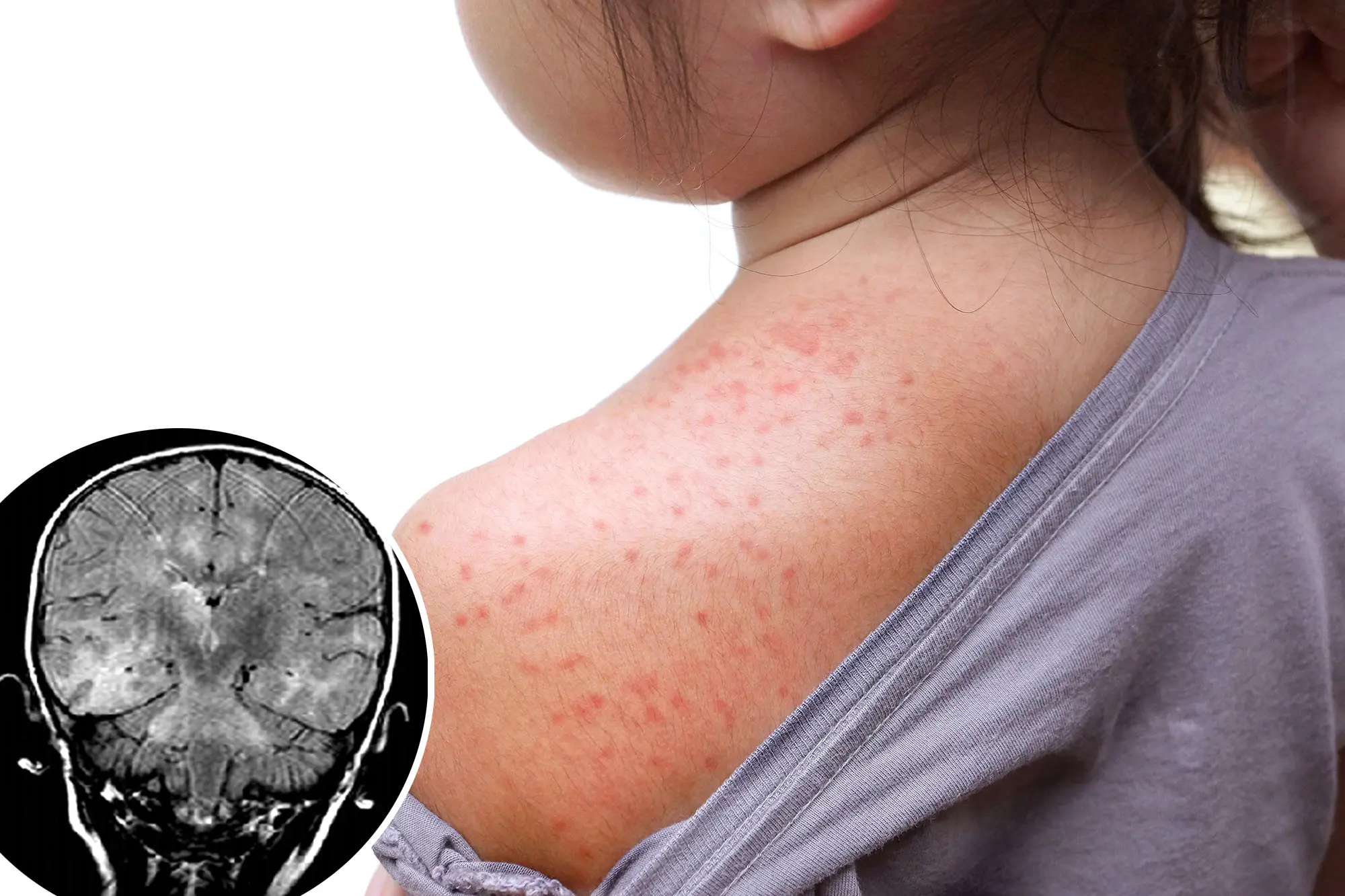

A school-aged child in Los Angeles recently died after developing a rare neurological disease years after contracting measles.
Authorities have shared few details about the case, noting only that the child had been infected with measles as an infant, before becoming eligible for the vaccine.
Measles is a highly contagious respiratory disease that spreads easily from person to person. The first dose of the measles, mumps, and rubella (MMR) vaccine is typically recommended for children between 12 and 15 months of age, with a second dose administered before kindergarten or first grade.

Measles is a highly contagious respiratory illness, often marked by flu-like symptoms and a distinctive red rash.
Pneumonia is the most common complication, but the infection can also cause bronchitis, laryngitis, and—very rarely—subacute sclerosing panencephalitis (SSPE), the condition that claimed the life of the child in L.A. County.
After the initial infection, the measles virus can remain in the body and acquire mutations that trigger SSPE years later. Among every 100,000 measles cases, roughly four to 11 individuals develop this disease.
SSPE progresses gradually, starting with mood changes and advancing to involuntary muscle spasms, writhing or twisting movements, severe brain damage, and eventually death. Symptoms usually appear six to 10 years after the original measles infection.

This imaging shows the brain of a person with subacute sclerosing panencephalitis (SSPE).
In the United States, only about four or five SSPE cases are reported each year, though the number is expected to rise as measles cases increase. SSPE has a mortality rate of 95%, and while antiviral and anti-inflammatory drugs may slow disease progression, there is no known cure.
The child in L.A. is one of three measles-related deaths reported this year by the Centers for Disease Control and Prevention.
“This case is a painful reminder of how dangerous measles can be, especially for our most vulnerable community members,” said L.A. County Health Officer Dr. Muntu Davis in a statement last week.
“Infants too young to be vaccinated rely on all of us to help protect them through community immunity,” the statement continued. “Vaccination is not just about protecting yourself—it’s about protecting your family, your neighbors, and especially children who are too young to be vaccinated.”
Vaccination rates for the MMR vaccine and other routine childhood immunizations in the U.S. have declined since the COVID-19 pandemic.

The MMR vaccine is 97% effective and is credited with preventing over 60 million deaths worldwide between 2000 and 2023, according to research.
A recent report found that 92.5% of kindergarteners had received the MMR vaccine for the 2024–25 school year, down from 95% in the 2019–20 school year.
“Declining vaccination rates stem partly from fraudulent research that attempted to link the MMR vaccine to autism—claims by a now-discredited doctor that have been thoroughly debunked,” wrote Benedict Michael, a professor of infectious neuroscience at the University of Liverpool, in The Conversation.
“Social media misinformation has amplified these fears, a problem potentially worsened by COVID-era skepticism around vaccines,” he added.

After the initial infection, the measles virus can remain in the body and cause serious problems years later.
Michael noted that the MMR vaccine is 97% effective, preventing over 60 million deaths worldwide between 2000 and 2023. Common side effects of the vaccine may include a mild rash, fever, swollen glands in the neck, cheeks, or jaw, and soreness or redness at the injection site.
In rare cases, recipients may experience allergic reactions, seizures, or neurological complications such as Guillain-Barré syndrome or inflammation of the spinal cord.
As of Wednesday, the CDC has reported 1,491 measles cases so far this year, with about 92% of patients either unvaccinated or having an unknown vaccination status. Twelve percent of cases required hospitalization, most often involving children under the age of five.
“The death in L.A. serves as an important reminder that measles is not a benign childhood illness,” Michael wrote. “It can cause serious complications, including pneumonia and, as this case shows, delayed but deadly brain damage years later.”


